

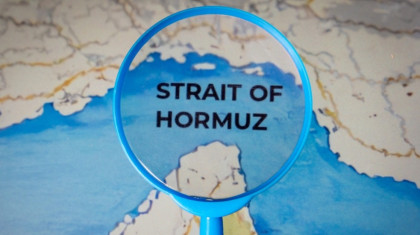
It has not retreated on Hormuz, describes a return to pre-war conditions as no longer possible, and asserts absolute sovereignty and initiative in the strait.

Iran's ongoing strikes against armed Kurdish organizations are the field-level manifestation of a long-accumulating strategic transformation, rather than an immediate reaction.

The course of the war reveals a fundamental paradox: while none of the principal actors appears capable of achieving a decisive victory, all retain sufficient capacity to obstruct a stable resolution.

Israel's chronic problem is the gap between tactical victory and strategic success.

YPG’s recent setbacks extend well beyond the Syrian theater. They may act as a catalyst for broader recalibration among Kurdish armed movements operating against the Islamic Republic –one that privileges political survivability over armed maximalism.

Iran’s protests stem from more than hijab politics, but rather caused by a deep economic collapse

The Iraqi elections constitute a critical juncture that will directly influence Iran’s regional strategy.

As Israel’s tactical gains fall short, a renewed Iran-Israel war remains possible

While limited and transactional cooperation mechanisms may emerge between Tehran and Riyadh, a deeper and more enduring strategic alignment between the two countries remains improbable in the near term.

Israel’s air strikes revealed more than military weakness; they exposed a systemic failure in Iran’s ability to think strategically in an interconnected world.

