

Amid renewed diplomatic engagement between Washington and Tehran, Iran faces a strategic dilemma: whether to continue supporting its affiliated militias within Iraq’s Popular Mobilization Forces (PMF) or to pursue their disarmament and political integration—potentially at the cost of its long-term leverage in Iraq.
Shifting Lines: U.S.-Iran Talks and the Future of Iraq’s Hashd al-Shaabi
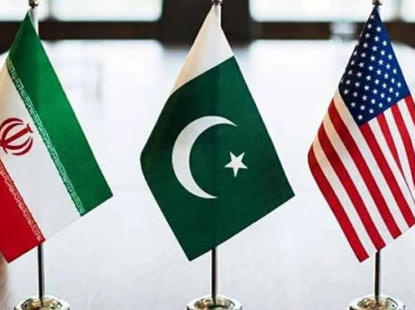
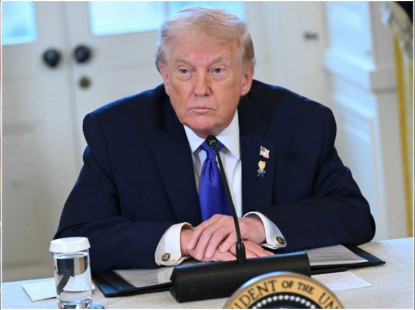
The first diplomatic contact between the Trump administration and Iran, held in Oman on 12 April and followed by a second round in Rome on 19 April, marked the onset of a potentially transformative diplomatic process. This engagement is expected to moderate the confrontational posture of United Sstates President Donald Trump—known for his hawkish stance toward Tehran—and reduce rising tensions across the region. A critical enabler of this shift has been Iran’s decision to drop its prior opposition to engage in talks with Washington.
While the full scope of these discussions remains opaque, Iran’s principal objective appears to be the easing of U.S. economic sanctions. However, the trajectory and outcomes of these talks will ultimately depend on the demands placed by Washington.
Reportedly, U.S. demands include limitations on Iran’s nuclear and ballistic missile programs, an end to its support for regional militia networks, and the disarmament of non-state actors. These conditions were partially echoed in a confidential letter sent by President Trump to Iran in early March. Former Quds Force commander Hassan Kazemi Qomi later confirmed that the U.S. seeks to cap Iran’s missile range at 200 kilometers and halt support for armed proxies across the region.
In this context, attention has increasingly turned to Iraq’s Popular Mobilization Forces (PMF), or Hashd al-Shaabi—a multifaceted paramilitary coalition with deep ties to Tehran. Three key developments highlight the PMF’s relevance in ongoing U.S.-Iran diplomacy:
- Following the October 7 attacks, Israel has ramped up operations against Iranian proxies, notably Hezbollah and the Houthis. Backed by Washington, Israel has scored tactical gains in Yemen and could now shift focus to Iraqi-based PMF units.
- The return of President Trump has revitalized efforts to neutralize Iran-backed factions within the PMF, seeking to diminish their capacity to threaten U.S. forces in Iraq.
- The collapse of Iran’s “axis of resistance” strategy after the fall of Syria’s Assad regime on 8 December has prompted Tehran to redeploy some of its regional proxies to Iraq—raising urgent questions about PMF restructuring and intent.
Amid renewed diplomatic engagement between Washington and Tehran, Iran faces a strategic dilemma: whether to continue supporting its affiliated militias within the PMF or to pursue their disarmament and political integration—potentially at the cost of its long-term leverage in Iraq. Conflicting reports suggest a lack of internal consensus. While some PMF factions are rumored to have acquiesced to U.S. demands under mounting pressure, more hardline groups—including Kata'ib Hezbollah, Harakat al-Nujaba, and Asaib Ahl al-Haq—have firmly rejected such overtures.
During a covert March visit to Baghdad, Quds Force commander Esmail Qaani reportedly urged PMF leaders to de-escalate hostilities with the U.S. Yet simultaneous reports indicate that Iran has supplied long-range missile systems to PMF units—underscoring the duality of Tehran’s current posture.
Maintaining the PMF’s status quo carries serious risks. Increased U.S. and Israeli scrutiny could result in targeted strikes and deeper diplomatic isolation. Iraqi Foreign Minister Fuad Hussein has acknowledged that Israel considered airstrikes against PMF factions, but such plans were reportedly paused following U.S. diplomatic intervention.
Alternatively, Iran could opt to disarm and fully integrate its allied militias into Iraq’s formal security apparatus—a move that would mark a profound shift in its regional strategy. Traditionally, Iran has favored maintaining proxy armed capabilities alongside political integration to maximize influence. Full demilitarization would erode Iran’s ability to project power across Iraq and into Syria, including coordination with groups like the PKK in areas such as Sinjar.
That said, this path could yield strategic dividends. A bureaucratically integrated PMF could bolster Iran’s soft power in Baghdad and reduce the likelihood of direct confrontation with the U.S. or Israel. It may also open the door to economic collaboration, including participation in infrastructure initiatives like the Development Road Project.
Ultimately, how Tehran resolves this strategic dilemma will shape the future of its presence in Iraq—and more broadly, its posture in a shifting regional landscape. The stakes are high, and Iran’s next moves will be closely watched in capitals from Washington to Baghdad.