
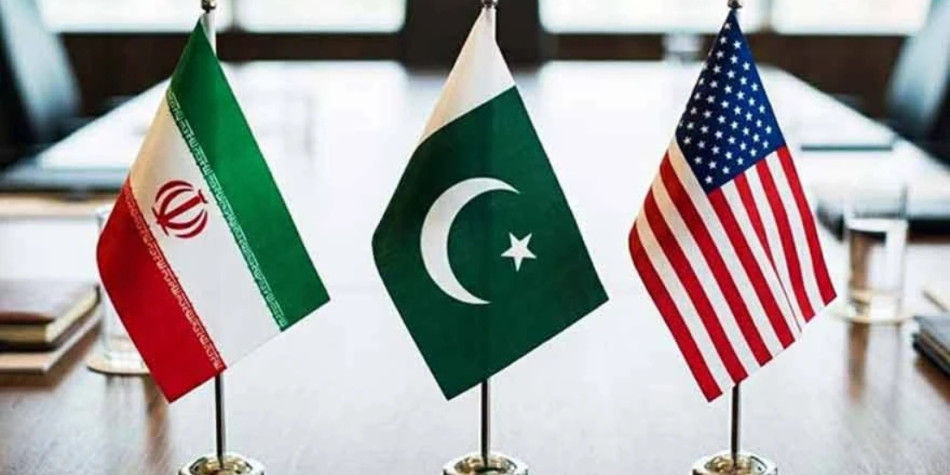
Pakistan’s role is not to impose a settlement, but to ensure that when either side is prepared to step back from confrontation, a diplomatic channel and a workable framework remain available.
Pakistan and the Search for an Iran–U.S. Off-Ramp
In a conflict, where one military strike can jeopardize months of diplomatic efforts, Pakistan is still striving to keep open a line of communication between Iran and the U.S.- something which neither side can afford to lose. Chief of Defense Forces, Asim Munir’s latest visit to Tehran on August 24, was emblematic of that. His visit came just days after the 60-day timeline envisaged under the Islamabad Memorandum had elapsed, with its implementation stalled. While no breakthrough happened, the significance of the visit lies in Islamabad’s ability to preserve the possibility of a diplomatic off-ramp at a time when the alternative is further escalation.
Even before the start of the conflict in February 2026, Islamabad has been engaged in mediation efforts between Tehran and Washington. These efforts culminated first in the Islamabad Talks in April, which marked the highest-level face-to-face engagement between Washington and Tehran since the 1979 Islamic Revolution, and later into the signing of the Islamabad Memorandum of Understanding in June, whose implementation was subsequently disrupted, but which continues to provide a roadmap for technical negotiations. Here it is important to note that Pakistan has also been careful not to treat mediation as an exclusively Pakistani enterprise. From the start, it has worked in coordination with key regional countries, supporting and complementing diplomatic initiatives undertaken by Qatar, Oman, Saudi Arabia, Türkiye, Egypt and other partners, alongside consultations with China. The Foreign Office has itself characterized these efforts as a “coordinated and concerted” process, with different states assuming greater responsibility at different stages and on different issues.
Why Pakistan Matters
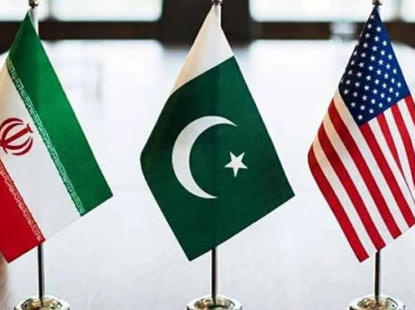
Pakistan is uniquely placed diplomatically because of the breadth of its relationships. Islamabad has direct channels of communication with both Tehran and Washington, while at the same time maintaining close ties with key Gulf and regional countries, including Saudi Arabia, Qatar, Oman and Türkiye. It also enjoys a longstanding strategic partnership with China. This gives Pakistan the ability to communicate across different political and strategic camps, without being confined to a single regional alignment.
Importantly, this access is not limited to the political and diplomatic level. Chief of Defense Forces Field Marshal Asim Munir’s visit to Tehran on 24 August demonstrated Pakistan’s ability to engage across different centers of decision making within Iran. During the visit, he met senior figures across Iran’s political and security leadership, including President Masoud Pezeshkian, Parliament Speaker and chief negotiator Mohammad Bagher Ghalibaf, and General Mohsen Rezaei, the Supreme Leader’s representative and Secretary of the Supreme National Security Council. Such access is particularly significant at a time when Iran’s security establishment plays a central role in decisions concerning both the conduct of the war and any possible return to negotiations.
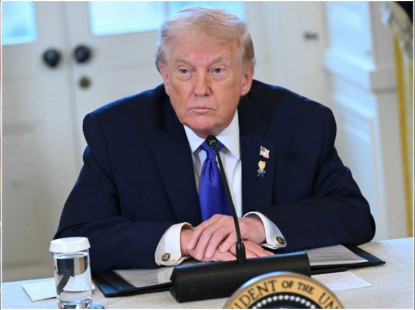
At the same time, Asim Munir also maintains a direct channel with Washington. Days before travelling to Tehran, he spoke with US President Donald Trump, underscoring Pakistan’s ability to communicate with the leadership on both sides of the conflict. It goes without saying that Pakistan’s ability to engage at multiple levels, political, diplomatic and security, strengthens its usefulness as an intermediary.
Moreover, what is noteworthy is Pakistan’s deepening security relationships elsewhere in the region. In September 2025, Pakistan and Saudi Arabia signed the Strategic Mutual Defense Agreement, further institutionalizing their longstanding defense partnership. This was followed on 7 August 2026 by the Mecca Joint Defense Agreement between Pakistan, Saudi Arabia and Türkiye, aimed at strengthening collective defense and deterrence. Islamabad has maintained that these arrangements are defensive in nature and are not directed against any particular country. Importantly, these deepening defense partnerships have not precluded Pakistan’s continued high-level engagement with Tehran. Only weeks after the Mecca agreement was signed, Field Marshal Munir was in Tehran engaging Iran’s political and security leadership. Pakistan has therefore sought to deepen its strategic partnerships with key regional states without allowing these relationships to close its channels with Iran.
Why Pakistan Has a Stake in De-escalation
For Pakistan, mediation has not simply been aimed at enhancing its diplomatic standing, there are clear strategic and economic interests involved. Pakistan shares a long border with Iran, and prolonged instability in its immediate neighborhood carries direct implications for border security, trade and regional stability. The domestic implications are equally significant. Instability in Iran could trigger refugee movements and aggravate sectarian tensions inside Pakistan, which has one of the world’s largest Shia populations. Nationwide protests following the death of Ayatollah Ali Khamenei demonstrated how developments in Iran have repercussions within Pakistan as well.
Moreover, Balochistan province which borders Iran, is central to Pakistan’s economic and strategic future. Gwadar remains a key node in The China-Pakistan Economic Corridor (CPEC), while major projects such as Reko Diq and prospective Gulf-backed energy investments have raised the province’s economic importance. Its role has grown further with Pakistan’s decision to allow third-country goods to transit through its territory to Iran via routes passing through Balochistan. Prolonged instability in Iran would therefore threaten not only border security, but also Pakistan’s wider connectivity and investment plans.
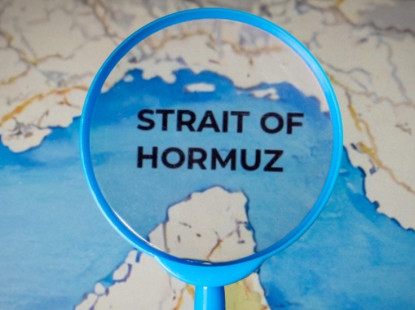
At the same time, the conflict has exposed Pakistan’s heavy dependence on the Gulf for energy. According to the IMF, 81 percent of Pakistan’s fuel imports originate in Gulf Cooperation Council countries, while more than half of its remittance inflows also come from the Gulf. The disruption of the Strait of Hormuz therefore created an immediate challenge for Islamabad. Pakistan meets between 80 and 90 percent of its petroleum demand through imports, much of which has traditionally passed through Hormuz.
Although the government was able to maintain uninterrupted petroleum supplies by arranging alternative routes, including through Saudi Arabia’s Yanbu port and ports in the UAE and Oman, the disruption still increased costs and reinforced Pakistan’s vulnerability to movements in international energy markets. Furthermore, Pakistan’s dependence on Qatar for liquefied natural gas, LNG, is even more pronounced. In 2025, all 108 LNG cargoes received by Pakistan came from Qatar. By June 2026, as regional supply disruptions persisted, Pakistan’s LNG imports had fallen to around 210,000 tonnes, only about one third of the volume recorded a year earlier.
The economic consequences have been significant for a country that had only recently started having some semblance of macroeconomic stability. In its latest Pakistan review, the IMF noted that though economic activity had gained momentum before the Middle East conflict, Pakistan still remained particularly exposed to higher Gulf energy prices, remittance flows and deteriorating global financial conditions and also expected energy and food price pressures to keep inflation elevated. Renewed military exchanges between Iran and the United States in early September pushed Brent crude back to around $95 per barrel, underlining how quickly another escalation can translate into higher import costs for Pakistan.
Agriculture represents another area of vulnerability. A major concern is diammonium phosphate, or DAP, a widely used fertilizer that is important during the early stages of plant growth. Pakistan produces part of its requirement domestically, but around half of national DAP demand is normally met through imports, with Saudi Arabia, China and Morocco among its principal suppliers. This dependence leaves domestic prices and availability exposed to international price movements, freight costs and disruptions to maritime trade. The pressure has already become visible. During the 2026 Kharif season, Pakistan’s main summer cropping period running roughly from April to September, DAP offtake between April and July fell to around 292,000 tonnes, almost 30 percent lower than during the same period a year earlier, with high prices identified as a major factor.
The Limits of Pakistan’s Mediation
Taken together, these security and economic stakes explain why Pakistan has invested so heavily in preventing further escalation between Iran and the United States. Yet the advantages that make Islamabad a useful intermediary should not be mistaken for leverage over the final outcome. Pakistan can facilitate dialogue, convey concerns and help preserve a negotiating framework, but it cannot determine the strategic choices made in Tehran or Washington. The repeated return to military escalation despite months of diplomacy illustrates this. Deep disagreements over the nuclear issue, sanctions, maritime security and the wider regional balance ultimately require political decisions by Iran and the United States themselves. Pakistan’s role is therefore not to impose a settlement, but to ensure that when either side is prepared to step back from confrontation, a diplomatic channel and a workable framework remain available.