

The course of the war reveals a fundamental paradox: while none of the principal actors appears capable of achieving a decisive victory, all retain sufficient capacity to obstruct a stable resolution.
The US/Israel-Iran War As A Regional and Systemic Crisis

The war that erupted on February 28 between the United States, Israel, and Iran is best understood not as a sudden rupture, but as the overt crystallization of long- accumulating strategic tensions. For years, Iran’s nuclear program, expanding ballistic missile capabilities, and its network of non-state partners –collectively framed by Tehran as the “Axis of Resistance” – have constituted the core of threat perceptions in Washington and Tel Aviv. From Tehran’s vantage point, however, these pressures –primarily emanating from these two actors– have been interpreted as components of a broader architecture of containment, ultimately aimed at constraining and destabilizing the Islamic Republic.
Until recently, these tensions remained, however tenuously, within the bounds of diplomatic management. The resumption of US–Iran negotiations on February 6 in Muscat –building on earlier rounds initiated in April 2025– suggested that both sides were still open to a negotiated solution. This was particularly striking given the entrenched US view of Iran’s leadership, especially under Supreme Leader Ali Khamenei, as structurally resistant to compromise. Yet whatever diplomatic space existed was decisively foreclosed by the outbreak of hostilities on February 28, which abruptly collapsed the negotiating track.
In contrast to the relatively contained twelve-day confrontation of June 2025, the current war has assumed a far more protracted, multidimensional, and strategically consequential character. Its opening phase was marked by a coordinated US–Israeli campaign targeting Iran’s command-and-control infrastructure, missile and unmanned aerial vehicle capabilities, and critical military assets. Iran’s response –initially intense but progressively calibrated– combined missile and drone strikes with a measured effort to avoid uncontrolled escalation.
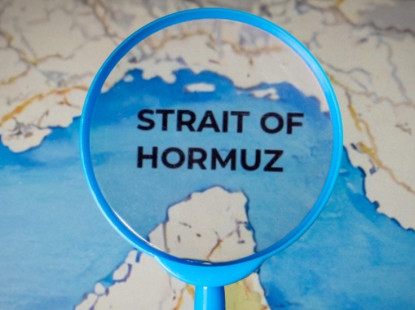
Over time, however, the conflict has expanded beyond a predominantly military confrontation into a broader regional –and increasingly systemic– crisis. The operational focus has gradually shifted from direct strikes on Iranian territory to the contestation of strategic and economic chokepoints: energy flows in the Gulf, the security of the Strait of Hormuz, and the integrity of maritime trade routes. As a result, the war’s implications now extend well beyond the immediate theater and carry significant consequences for global energy markets, supply chains, and geopolitical alignments. Further, from the outset, one of the central analytical and policy questions has been whether the conflict could culminate in regime change in Iran. Such an outcome would not merely reorder Iran’s domestic political landscape but would also fundamentally reshape its external relations especially with the US, Russia, and China.
This, in turn, raises a critical question: is regime change in Iran a plausible outcome of the current war?
The limits of collapse
The short answer is no. Despite the assassination of several senior figures including, most notably, Supreme Leader Khamenei in the early stages of the conflict, and notwithstanding significant military attrition, the institutional core of the Iranian state has thus far demonstrated resilience. Decision-making authority has become markedly more centralized, while the influence of the Islamic Revolutionary Guard Corps and the broader military security establishment has expanded. The resulting configuration points not to systemic disintegration, but to a more securitized and rigid model of governance one that privileges regime continuity over ideological flexibility.
Equally significant is the absence of the internal fragmentation anticipated by Washington and Tel Aviv. While underlying social discontent remains, the perception of an existential external threat has, at least in the short term, fostered a degree of internal consolidation. In this sense, Iran’s wartime strategy appears less oriented toward achieving decisive victory than toward avoiding strategic defeat and ensuring regime survival.
That equilibrium, however, is inherently unstable. The cumulative pressures of the war are likely to accelerate Iran’s movement toward the nuclear threshold, thereby introducing a more volatile and less predictable deterrence environment. Under such conditions, the consequences of the conflict are better understood not in terms of regime collapse, but of regime transformation which will be potentially driven by internal recalibration under duress and shaped by the evolving responses of external actors.
Regional reverberations and systemic shockwaves
At the regional level, the war has further unsettled an already fragile Middle Eastern balance of power by accelerating existing fault lines while introducing new layers of volatility. Iran’s operational posture –extending beyond Israel to include US military assets as well as military and civilian sites in several Gulf states– has effectively widened the conflict’s geographic and strategic scope. The deliberate targeting, or credible threat thereof, against energy infrastructure and critical maritime routes has forced regional actors to recalibrate their security doctrines under conditions of heightened uncertainty.
Perhaps more consequentially, any sustained degradation of Iranian state capacity carries the risk of unintended second-order effects. Chief among these is the potential loosening of central control over Iran’s network of aligned non-state actors. A more autonomous constellation of proxy forces –operating with diminished coordination but sustained capability– could generate localized security vacuums across a broad arc stretching from Iraq to Syria.
The result would not be a linear weakening of Iranian influence, but rather its diffusion into more fragmented, less predictable forms, deepening the paramilitary character of regional order. At the global level, the war’s impact is most acutely visible in the domains of energy security and economic stability. Escalating tensions around the Strait of Hormuz –a critical chokepoint in global energy flows– have introduced renewed volatility into oil and natural gas markets. Simultaneously, disruptions to maritime security are placing strain on already fragile supply chains,amplifying inflationary pressures and compounding systemic economic risks. In this sense, what began as aregional military confrontation is increasingly assuming the contours of a broader systemic crisis.
For the US, the conflict has once again exposed a persistent strategic dilemma: overwhelming military superiority does not readily translate into durable political outcomes. Iran’s capacity to impose asymmetric costs – through missile strikes, drone warfare, and its extended regional networks– combined with the cautious and at times ambivalent posture of US partners, has rendered both the trajectory and the end-state of the conflict deeply uncertain. The result is a familiar but unresolved tension between escalation dominance and strategic efficacy.
This evolving risk environment introduces a heightened level of uncertainty and security risk for Iran’s neighbors –particularly for Türkiye, given its complex relationship with Iran and its broader engagement across the region. So where does Ankara stand in this war?
Türkiye’s calculated balancing
From the outset, Türkiye has positioned itself as a vigilant and engaged observer, closely tracking both the economic and security dimensions of the conflict. Ankara’s initial response –articulated by President Recep Tayyip Erdoğan as a rejection of this “senseless, unlawful, and unnecessary war” – framed the crisis in normative as well as strategic terms, emphasizing its broader human and systemic costs. Prior to the outbreak of hostilities, Türkiye had already sought to mitigate escalation through diplomatic initiatives, in line with its longstanding position on tensions between Washington and Tehran.
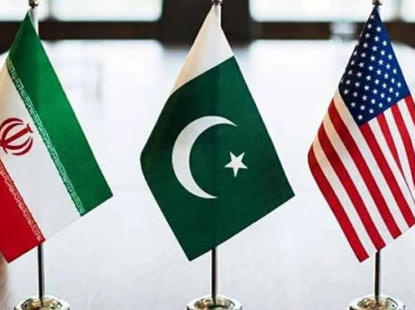
With the onset of war, Ankara operationalized this approach through a set of clearly defined objectives, as outlined by Foreign Minister Hakan Fidan: bringing the conflict to an end, preventing its regional spillover, preserving a diplomatic pathway, and avoiding direct entanglement. In pursuit of these aims, Türkiye intensified its engagement with key regional actors –including Pakistan, Egypt, and Saudi Arabia– while also contributing to the preservation of indirect communication channels between Washington and Tehran.
At the same time, from Ankara’s perspective the war has, one again, underscored the structural limitations of the international system, particularly the United Nations, in managing high-intensity interstate conflicts. Positioning itself as a partial corrective to this institutional vacuum, Türkiye has pursued a more proactive and regionally coordinated diplomatic posture. Yet this activism is calibrated rather than open-ended. Ankara remains acutely aware that further escalation –especially the prospect of a US ground intervention– could necessitate a shift from a primarily diplomatic posture toward a more security- driven approach.
For Türkiye, the principal red line lies in the regionalization of the conflict and the potential internal destabilization of Iran along ethnic or sectarian lines. Such a scenario would not only prolong the war but also generate spillover effects with direct implications for Türkiye’s own security environment. Accordingly, while Ankara continues to prioritize de-escalation and diplomatic engagement, it is simultaneously signaling a readiness to recalibrate its posture should the conflict cross these critical thresholds.
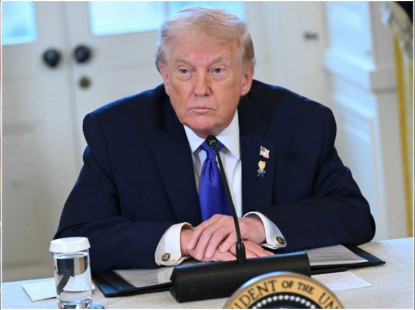
Against this backdrop, and amid the increasingly contradictory signals emanating from President Trump – alternating between rhetorical openness to diplomacy and tangible preparation for further escalation– the central question at this juncture is not merely whether the war will continue, but in what direction it is likely to evolve.
Search for a face-saving solution
Taken together, the trajectory of the war underscores a central paradox: while none of the principal actors appears capable of securing a decisive victory, all retain sufficient capacity to preclude a stable resolution. The result is a conflict likely to persist in a state of managed escalation –periodically intensifying, yet falling short of outright systemic rupture in the absence of a viable diplomatic pathway. For Iran, the war is not producing collapse but a hardening transformation toward a more securitized, centralized, and risk-tolerant state. For the US and Israel, the challenge lies in translating tactical and operational gains into a sustainable political outcome, a task that has repeatedly proven elusive. For regional actors, including Türkiye, the imperative is to navigate an increasingly fluid landscape in which the boundaries between deterrence, escalation, and unintended spillover are becoming progressively blurred.
Ultimately, the conflict is redefining not only the balance of power in the Middle East, but also the terms through which that balance is contested. Whether through disrupted energy flows, shifting alliance structures, or the gradual normalization of high-intensity confrontation, its effects are already extending well beyond the region. The critical question, therefore, is not simply how the war will end, but what kind of regional order will emerge in its aftermath –and what its global implications will be.
This article was originally published on April 9, 2026, in WALD E-NEWSLETTER