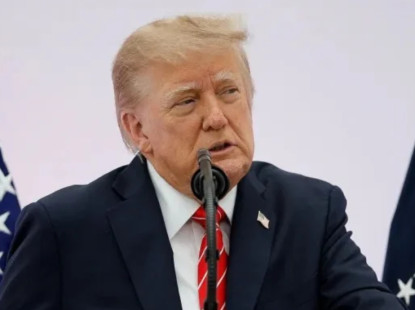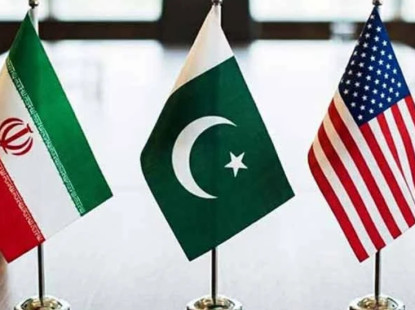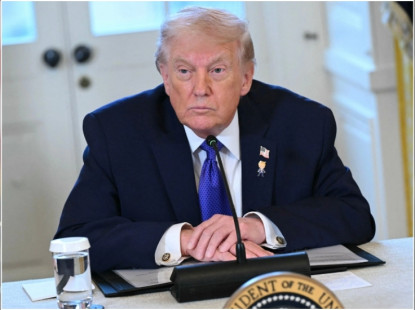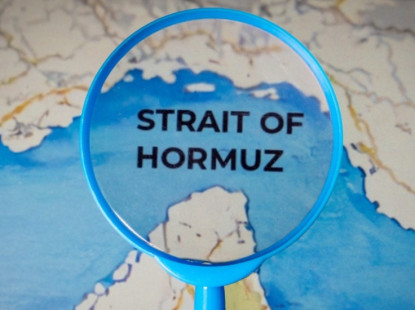
The cost of the war for Washington continues to mount with each passing day. The decision Trump makes after the midterm elections will reveal how the U.S. president chooses to pay that price, rather than reflect a coherent strategy or a shared assessment within the U.S. administration.
After the Midterms, What Next for Trump’s Iran War?

The United States-Israel war against Iran that started on 28 February has expanded well beyond its initial objective of dismantling Tehran’s nuclear programme. Months of ceasefires, diplomatic negotiations and renewed hostilities have done little to clarify Washington’s ultimate strategic objectives. The conflict opened with the killing of Iran’s Supreme Leader, Ali Khamenei, followed by a ceasefire in April, the signing of a memorandum of understanding in Islamabad in June, its collapse in July and the subsequent reinstatement of the U.S. naval blockade. At the outset, President Donald Trump made clear that his ambitions extended beyond dismantling Iran’s nuclear programme to bringing about regime change, openly calling on Iranians to rise against their government. As the confrontation dragged on, however, regime change has vanished from his public rhetoric.
Washington is now seeking to sever Iran’s remaining economic lifelines through two sanctions campaigns, designated ‘Operation Economic Outcast’ and ‘Economic D-Day’, the latter invoking the Allied landings in Normandy in June 1944. At the same time, U.S. forces continue to conduct strikes against targets along Iran’s southern coast, from Larak Island to the vicinity of Bandar Abbas.
Strategy or Improvisation? Washington’s Iran Policy
Two competing interpretations have emerged regarding Washington’s objectives. The first, which borders on conspiracy theory, suggests that the Trump administration is deliberately seeking to restrict global hydrocarbon supplies to increase the dependence of Iran and other countries on U.S. policies. Proponents of this interpretation also contend that the administration is attempting to divert public attention from the Epstein files, including questions surrounding their contents, the extent of their disclosure to American and international audiences, the prominent political and business figures named in them, and Epstein’s alleged connections to Israel.
The second interpretation offers a simpler explanation: President Trump has no coherent strategy towards Iran. This perception has prompted some social media users to mockingly dub him “Don Tzu”, a reference to the ancient Chinese military strategist Sun Tzu. The satirical maxim associated with this character, “If you don’t know what you’re doing, your enemy certainly won’t either”, captures the uncertainty confronting Washington, Tehran and other regional capitals.
Yet the available evidence suggests a reality somewhere between these two interpretations. President Trump may lack a coherent long-term strategy, but his approach follows a discernible logic: allowing time and sustained pressure to weaken Iran’s position. The difficulty for Washington is that time is proving costly for the U.S. as well.
The Hormuz Blockade and the Limits of Economic Pressure
Available data suggest that the naval blockade imposed by the Trump administration following Iran’s closure of the Strait of Hormuz to maritime traffic on 1 March is beginning to have a substantial impact. According to Bloomberg’s tanker-tracking data, Iran exported an average of 250,000 barrels of crude oil per day in August but recorded no exports in September. This marked the first time since the outbreak of the conflict that Iranian crude oil exports had fallen to zero.
Figures published by United Against Nuclear Iran (UANI) in early October indicated that at least 50 tankers carrying crude oil, petroleum products and liquefied petroleum gas (LPG) were stranded off Iran’s coast, unable to proceed. Sixteen were reportedly positioned near Kharg Island. The U.S. Treasury Department has also claimed that Iranian oil shipments came to a halt in October. With onshore and offshore storage facilities approaching full capacity, Tehran may soon face the prospect of cutting production. Shutting down oil wells, however, could inflict costly and lasting damage on the country’s oilfields.
Further complicating the situation are allegations that the U.S. has secretly conducted dredging operations between islands off the Musandam Peninsula, on the Omani side of the Strait of Hormuz, to create a passage for large oil tankers. These claims, which have circulated on social media alongside satellite imagery, remain unverified by independent sources. Neither Washington nor Muscat has publicly addressed them.
In August, the U.S. Navy also reportedly undertook efforts to clear more than 100 suspected mines detected within the strait’s traffic separation scheme. Such measures suggest that Washington is seeking to reduce Tehran’s leverage over maritime traffic by establishing an alternative transit route. Iran, however, views attempts to bypass its control through the Omani side of the strait as a challenge to its strategic position and has continued to target vessels using this passage.
The Mounting Costs for Washington
The blockade may be placing Iran under severe economic pressure, but maintaining it is also imposing considerable costs on Washington. According to Bloomberg, U.S. forces deployed in and around the Strait of Hormuz account for approximately one-third of the Navy’s combat fleet, with the deployment costing an estimated $32.5 million per day. The cumulative cost of the blockade alone has reportedly exceeded $2 million since 14 July. Even these estimates do not fully capture the operational burden, including the strain on crews deprived of port calls for months, deferred maintenance and the depletion of air and missile defence stockpiles.
The material losses have also been substantial. According to a Pentagon report cited by CNN International, U.S. military aircraft damaged by Iranian strikes or lost to friendly fire during the first phase of the war, between 28 February and 8 April, were valued at approximately $3.8 billion.
These mounting costs have acquired particular political significance as the U.S. holds its midterm elections today, 3 November. During his 2024 presidential campaign, President Trump criticised his predecessor, Joe Biden, for failing to bring the wars in Ukraine and Gaza to an end and pledged to keep the U.S. out of new military conflicts. Yet his decision to launch a war against Iran, coupled with the subsequent rise in fuel prices, has created additional political difficulties for Republicans in the run-up to the elections. His statement on 8 October that he would refrain from further strikes against Iran until after the vote must also be understood in the context of these domestic political considerations.
The tension between diplomacy and coercion remains evident in Washington’s approach. On the same day that President Trump described the Qatar-mediated indirect talks with Iran as “productive”, the U.S. Treasury Department imposed sanctions on 17 additional vessels linked to Iran’s shadow fleet. Although military exchanges have diminished considerably in intensity since early April, Washington’s campaign of economic pressure continues unabated. Whether the midterm elections will prompt a shift in this approach remains an open question.
Three Paths After the Midterms
Washington faces three broad options once the electoral pressure has eased.
The first is to sustain a prolonged but limited confrontation. This would entail maintaining the naval blockade, further degrading the Islamic Revolutionary Guard Corps’ (IRGC) naval capabilities through targeted strikes along Iran’s southern coastline and islands, and intensifying economic pressure. As IRAM expert Dr. Rahim Farzam has observed, the current condition of “neither war nor agreement” appears, at least on paper, to favour Washington. Yet sustaining this approach would require keeping approximately one-third of the U.S. Navy’s combat fleet deployed in the Gulf for an indefinite period, potentially weakening Washington’s deterrent posture towards China.
The second option is a negotiated settlement. The Islamabad Memorandum signed in June demonstrated that Washington and Tehran could reach an understanding on several central issues. A reciprocal arrangement involving the reopening of the Strait of Hormuz and the lifting of the U.S. blockade, alongside limited Iranian oil exports and the gradual release of frozen Iranian assets, suggests that a compromise remains possible. Nevertheless, Tehran’s insistence that the strait will remain closed until the blockade is lifted and its frozen assets are released illustrates the depth of the remaining disagreements. The rapid collapse of the June memorandum also exposed the profound lack of confidence between the two sides regarding the implementation of their commitments.
The third option is a major military offensive following the midterm elections. Reports that the Pentagon has prepared additional military options for the post-election period have kept this scenario firmly on the agenda. With immediate electoral pressures behind him, President Trump could seek to launch a broader campaign against Iran’s nuclear infrastructure, ports and remaining military capabilities in an attempt to “finish the job”. Yet the course of the war since February has exposed the limitations of air power in compelling Tehran to capitulate. An offensive of this magnitude could drive oil prices back towards their March peaks while further straining Washington’s relations with Gulf partners already unsettled by the prolonged confrontation.
The most plausible trajectory is a continuation of the first option, gradually paving the way for the second. Such a transition, however, is unlikely to follow a linear course. The Trump administration’s approach has consistently been to maximise pressure before seeking to secure a negotiated settlement that can be presented as a “grand deal”. Washington may therefore resort to a limited but forceful military escalation after the elections to strengthen its bargaining position. In this scenario, the third option could serve as an instrument of coercive diplomacy, with escalation intended to facilitate an agreement rather than precipitate another full-scale war.
A War Without an Easy Exit
The U.S.-Iran confrontation has exacted a considerable toll on both sides, although it remains uncertain which side is better positioned to sustain a prolonged war of attrition. Iran’s oil revenues have reportedly fallen to zero, its storage facilities and tankers are nearing capacity, and its economy faces the prospect of a deepening crisis. Nevertheless, Tehran retains the capacity to threaten maritime security in the Strait of Hormuz, tie down substantial U.S. naval forces in the Gulf and disrupt global energy markets.
Washington, for its part, possesses overwhelming military and economic capabilities to sustain pressure on Tehran. Yet maintaining this pressure carries mounting strategic costs. The prolonged commitment of U.S. forces to the Gulf risks eroding Washington’s military posture in the Pacific, while the depletion of ammunition stockpiles, mounting wear on military equipment and growing domestic discontent impose additional constraints on the administration.
Perhaps “Don Tzu” himself does not know where his approach will ultimately lead. Tehran and Beijing, however, recognise one fundamental reality: the longer the confrontation persists, the higher the price Washington will have to pay. President Trump’s decisions after the midterms will therefore reveal less about the existence of a coherent U.S. strategy towards Iran than about how the president intends to manage the escalating costs of a war from which neither side has found a viable exit.